Baird News

Scholarship & Grants Program Update – November 2025

Wade Bocking

Over the past four months, I have been actively engaged in preparing the foundations for my PhD work, particularly spending time consolidating and expanding my knowledge of vascular regeneration. During this exploration into the literature surrounding vascular regeneration, I have been collaborating with other members of the lab, under the direction of Dr Rob Hume, to prepare manuscripts for future publication.

In regard to activities in the lab, I have been learning new techniques, such as histology (processing vessel tissue) and microscopy, which will underpin my work over the course of the project. With these techniques, I have been steadily processing over 100 samples from the vascular graft study undertaken in sheep, and I hope to have a number of exciting results in the coming weeks. Additionally, I performed mechanical testing on samples related to this project and have subsequently learnt how to analyse this data. Along with this, I have been trialling the Lunaphore COMET, a cutting-edge tool designed to produce images which can give users detailed insights into cell types/interactions and how this may relate to vessel regrowth. While this is still in its early stages, we have already been able to see its potential for future use.

The near future will be fruitful, as I have planned to finish preliminary work on the sheep artery replacement samples, as well as looking more closely at their protein profiles to assess the effectiveness of graft remodelling. Alongside this, the group are also aiming to begin the next phase of our project which involves testing the refined version of the vascular graft.

I would like to take a moment to thank the The Baird Institute and its supporters for this opportunity.

Matthew Taper

I’ve recently been working on a number of projects that build on Dr Cassandra Malecki’s study of ageing. With assistance from the team and collaborators from Monash University, we have completed a study measuring DNA methylation (a biomarker closely linked to ageing) in heart samples across healthy ageing. This will be the largest study of its kind to date, and we are currently analysing the results in preparation for publication.

I also recently completed a comparative study of ageing in the two main pumping chambers of the heart – the left and right ventricles – at the protein level. Preliminary results have revealed several interesting findings with potential clinical implications, particularly since many medications effective in left-sided heart failure have little to no effect on conditions affecting the right side.

To further explore these differences between the ventricles, we’ve started using advanced techniques that allow us to examine not only the properties of individual heart cells, but also how their surrounding environment (the types of neighbouring cells they interact with) changes over time during ageing. This helps us better understand how shifts in cellular interactions might contribute to overall heart function with age.

Bríet Stefánsdóttir

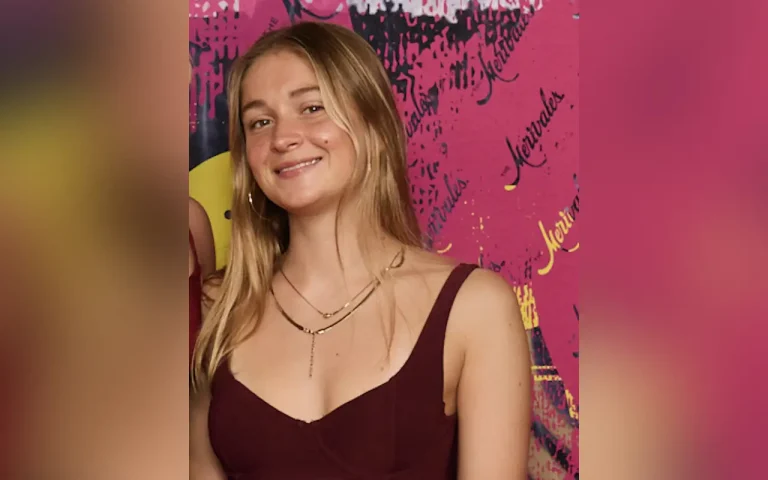
My name is Briet Stefansdottir, and I am a medical student at the University of Copenhagen. Originally from Iceland, I moved to Denmark in 2020 to begin my medical studies. I completed my Bachelor of Science there and am now pursuing my Master of Science, which I expect to finish in 2026.

Alongside my studies, I have been involved in cardiology research, focusing on cardiovascular function and metabolic profile in adolescents born after assisted reproductive technologies. I am also a board member of the Surgical Society for medical students in Copenhagen.

I have decided to specialise in cardiothoracic surgery. I always knew I wanted to become a surgeon, but after seeing my first open-heart surgery, there was no turning back.

In our final year of medical school, we write a master’s thesis in the field we want to pursue. I am truly honoured to be supervised by Professor Paul Bannon and Professor John O’Sullivan, and to have the support of The Baird Institute.

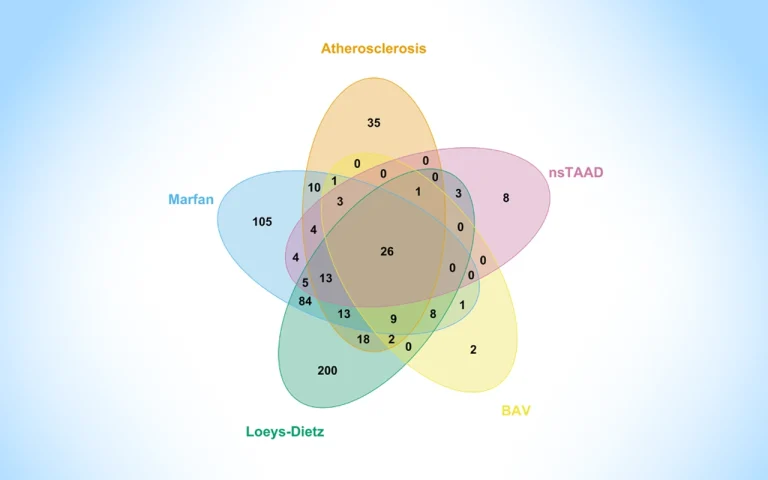
My research focuses on identifying proteomic patterns in aortic tissue from patients with thoracic aortic aneurysms (TAA), using samples from the Sydney Heart Bank. TAA are often asymptomatic until they rupture, which is associated with high morbidity and mortality. Unfortunately, current diagnostic methods are limited, and many at-risk patients are not identified before life-threatening complications occur.

Thoracic aortic aneurysms can arise from different causes. Some are linked to genetic syndromes such as Marfan, Loeys-Dietz, Turner or bicuspid aortic valve (BAV). Others run in families without being tied to a known syndrome (familial nonsyndromic TAAD). Many cases, however, are sporadic and typically associated with aging and risk factors such as hypertension, smoking or atherosclerosis.

In this project, proteomic data from healthy aortas will be compared with samples from patients with aneurysms, including sporadic, syndromic and familial nsTAAD.

Our hypothesis is that proteomic patterns differ between aneurysms and healthy controls and may also vary across aneurysm subtypes. By identifying such patterns, we aim to discover new biomarkers that could help detect high-risk patients earlier than current clinical tools allow and therefore decrease the risk of complications. Promising markers can then be validated in large population cohorts, such as the UK Biobank, to assess their predictive value for thoracic aortic aneurysms.

I am truly grateful for this opportunity and excited to spend the coming months in Sydney working on this project. It is a privilege to be part of such an outstanding research group and to contribute to research that may ultimately improve diagnostic methods for thoracic aortic aneurysms, methods that may help save more lives.

I am especially thankful to The Baird Institute and its supporters for making this research possible.

Catch up on our webinars at any time

At The Baird Institute, we’re committed to keeping our supporters informed and engaged through our online webinars. These sessions are a fantastic opportunity to hear from experts, learn more about the latest developments in heart and lung research, and to get an insider’s view of the important work we’re doing.

If you’ve ever missed a webinar or simply want to revisit one of our past sessions, don’t worry – you can watch them at your own convenience! All of our webinars are recorded and available for viewing at any time.

Simply visit our Webinars Page at bairdinstitute.org.au/webinars

Research Projects – November 2025

Dr Cassandra Malecki – Post-Doctoral Fellow – The Baird Institute

As a post-doctoral fellow at The Baird Institute, I have been extremely fortunate to contribute to important and exciting research over the past 18 months. I have an interest in trying to understand how our heart and vessels change as we age. We know that age is one of the biggest risk factors for developing cardiovascular disease and therefore understanding the changes that occur at a molecular level will assist in the development of preventative and therapeutic options for age related cardiovascular disease such as heart failure and atherosclerosis.

Our comprehensive study comparing proteins, metabolites, lipids and thousands of genes between younger and older hearts was recently accepted for publication in Aging Cell, a leading journal in the aging field. This was an extremely exciting achievement, as this is the first study to characterise the molecular patterns of normal human cardiac aging. We hope that our paper and data will serve as an essential resource for all those with an invested interested in unravelling the complex landscape of human cardiac aging.

This paper on human cardiac aging was submitted to the Cardiac Society of Australia and New Zealand (CSANZ) for consideration of the Ralph reader prize, a prestigious prize for early career researchers given at their Annual scientific conference. I was chosen as one of the three finalists and was honoured to be able to present my research at the conference. The presentation received an immense amount of positive feedback, sparking many insightful and scientifically rich conversations.

Currently, I am now working on a project investigating how the aorta, our largest blood vessel, changes as we age. We have looked at the expression of thousands of proteins in healthy aortas from people ranging from 10 to 65 years old and have analysed how they change with age.  We have seen that several key proteins important for the strength and structure of the aortic wall decrease as we age. I am currently writing up the study to submit for publication working on designing experiments to further characterise the changes in these proteins.

In addition to my research in cardiovascular aging, I also have a role in managing the Sydney Heart Bank, an essential resource of human cardiovascular tissue, which has been pivotal in numerous research projects being conducted by our research lab. I have been involved in helping with multiple projects and over the past 18 months several of these studies have been published in highly respected scientific journals. This highlights the importance of utilising the tissue of the Syndey Heart Bank in well-designed studies to further our understanding of cardiovascular disease.

I am extremely grateful for the continuing generosity of the supporters of the Baird Institute; whom without, this exciting research would not be possible.


Investigating The Long-Term Outcomes After Cardiac Surgery

Dhairya Vayada, Data Research Assistant

The Baird Institute team is working on investigating the long-term outcomes after cardiac surgery. This is a data intensive project, linking our internal hospital database with a larger database of all hospitalisations, emergency presentations and mortalities in NSW. The broad goal of this project is to understand what happens to patients in the long term (>5 years) after cardiac surgery.

As a part of this project, we are investigating the long-term outcomes after coronary artery bypass graft (CABG) surgery. CABG surgery is one of the most frequently performed cardiac surgeries worldwide and is a cornerstone in the management of coronary artery disease. In this procedure, blockages in patient’s coronary arteries – arteries which supply blood to the heart, are bypassed using veins or arteries from other parts of the body. This bypass restores blood flow to the heart, restoring the function, viability of the muscle and providing symptomatic relief from chest pain. There are two main types of CABG performed – ‘on-pump’, where a cardiopulmonary bypass circuit is used to circulate blood and the patient’s heart is stopped, and ‘off-pump’, where the procedure is conducted on a beating heart. Furthermore, this procedure can be done as an isolated procedure, or in combination with valve surgery.

While these are routinely performed surgeries, analysis of the long-term data will help in developing an understanding of the clinical course and improve survival outcomes and quality of life for the patients.

In this project, patients who have undergone an isolated CABG procedure in the hospital database will be identified. After linkage with the broader NSW database, information about each patient’s hospitalisations, emergency presentations and mortality will be collected. Demographic information about each CABG group (on-pump and off-pump) will be obtained and compared. Survival analysis will then be conducted to explore survival trends >5 years after the surgery. Importantly, leading causes of cardiac-related re-hospitalisations and re-interventions will also be analysed, providing valuable information on the clinical course and major risks for these patients after surgery.

The results will shortly be published in a peer-reviewed journal and presented as a poster at the 2025 Tri-Society Cardiac & Thoracic Symposium (3SCTS).

Cutting Edge Artery Replacements Webinar – 25 August 2025

Dr Robert Hume, Prof Paul Bannon

In this webinar, held on 25 August 2025, Dr Hume and Professor Bannon provided an update on their ongoing research at the Centre for Heart Failure and Diseases of the Aorta into cutting-edge artery replacements. Thanks to the generosity of our supporters, we have been able to take significant steps forward in this research, initiating advanced imaging studies, including CT 2D and 3D angiograms, as well as critical ultrasound-based experiments, all essential tools for assessing how our degradable artery grafts are performing.

The team has also diligently been preparing tissue samples for microscope analysis, helping us gain deeper insights into the cellular structure of the grafts. At the same time, we are continuing to work on new designs of the synthetic artery with each version aiming to improve on the last, as we refine their structure and performance.

A Patient Story – Geoff Hatfield

I’ve spent most of my life working in the marine field, half my time on the tools and the other half on the drawing board. I’ve always considered myself reasonably fit. I played soccer for 40 years, and for 50 years I’ve been a proud member of the RFS, with 40 of those years spent fighting fires.

Back in January 2007, while I was living and working at Yamba, I went to the local GP about a cut on my finger. It was nothing major, it didn’t even need stitches. But while I was there, I mentioned that a couple of times when I got up in the morning, I felt like I’d just run a marathon or played a hard game of soccer. The GP sent me to a cardiologist, who started with some preliminary tests. Then he looked at me and said, “We won’t be doing the stress test after all. Don’t lift anything heavy – in fact, don’t lift anything at all. You need a heart operation.”

Within two weeks, I was at RPAH having tests, and then on 6 February 2007, I had a 10-hour operation with surgeon Nic Hendel. I ended up having my aorta, aortic arch, and aortic valve replaced. The aneurysm they found was large. Just two weeks after that operation, I collapsed in the bathroom and was momentarily knocked unconscious. I was taken to Hornsby Hospital and then transferred back to RPAH, where I was diagnosed with atrial fibrillation. Thankfully, it corrected itself and hasn’t returned. Rehabilitation after surgery kept me busy with lots of exercises. At first, I thought about the operation a lot, but these days I don’t dwell on it. I just try to eat well, take things easy, and keep going.

Life went on, and I eventually returned to light work in Newcastle. But in November 2011, I felt an unusual discomfort in my chest one evening and decided to admit myself to John Hunter Hospital. It turned out I was having a cerebellar stroke. Looking back, I was lucky, the stroke happened while I was already in hospital. Rehab this time wasn’t just the usual physical work; I also had to relearn how to speak and do extra coordination exercises, like writing.

These days, I make sure I have regular check-ups with my GP, my cardiologist, and a neurologist who monitors me for epilepsy and possibly early Parkinson’s disease. I share my story in the hope it helps others who might face similar challenges. The Baird Institute does incredible work in this space, and if sharing my experience adds to that, then I’m glad.

Geoff at the Hornsby Men’s Shed (far right)

Paul Bannon – 2GB Radio Interview, 16 May 2025

The Baird Institute is appealing to all Australians for their help to reach the goal of $195,000 by June 30. Your donation will fund revolutionary research into our self-regenerating artificial blood vessels, giving families more precious moments together.

Listen to the full interview below:

Research Presentation – Dr Robert Hume

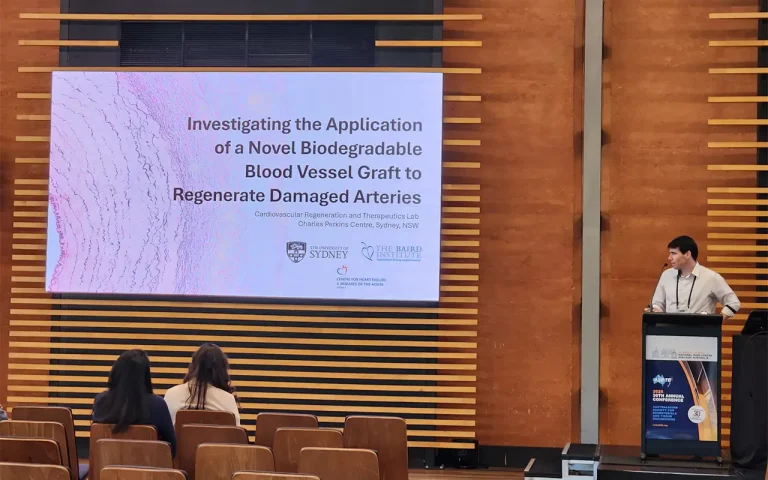
I recently attended the International Society for Heart Research (ISHR) 25th world congress, in Nara, Japan. This prestigious 4-day conference occurs every 3 years and brings together the world’s top heart researchers from every continent. The Baird Institute’s kind support to attend this event enabled me to present my groundbreaking findings on the heart’s ability to partially regenerate following a heart attack during a scientific poster presentation session (see image). It also enabled me to forge potential new collaborations with scientists hailing from across the globe. These international collaborations are integral for bringing together experts from different fields, to produce the highest calibre of research impact. I was also able to attend talks from leaders in the field presenting their current unpublished data at the forefront of cardiovascular research. This not only informed me of the current state of this research area but also provided a wealth of ideas to progress and enhance my own research program. I am incredibly grateful for this opportunity from The Baird Institute and also for the donors who make this happen.

Recently, I was invited to speak at the cardiovascular initiative (CVI) Research SymposiumPipelines to Success: Empowering the Next Wave of Cardiovascular Innovators at the University of Sydney. I was very honoured to have been invited to this event and chose to present our latest findings relating to my other research topic – blood vessel regeneration. Specifically, I presented our exciting new synthetic blood vessel graft, to replace damaged blood vessels, that has shown promise in laboratory experiments, outperforming the currently used clinical gold standard material, polytetrafluorethylene (aka Goretex). At this event, I contributed to a panel discussion with other cardiovascular research leaders to discuss the future of the field.

Taking Care of Your Aorta – Dr Michelle Lim

We were pleased to work with the GenTAC Alliance in the USA to host a webinar on 8 May, 2025 for patients and families affected by aortic disease. The GenTAC Alliance and The Baird Institute share common goals, prioritising research and patient and physician education on genetic aortic and vascular conditions. The webinar was co-hosted by Professor Alan C. Braverman, a world-leading aortic clinician and researcher from Washington University in the USA.

Joining the panel were two highly respected Australian aortic specialists: aortic cardiologist Professor Richmond Jeremy, and Professor Paul Bannon, aortic cardiothoracic surgeon and Chair of The Baird Institute.

The webinar covered various aspects of aortic care, including the genetic basis of aortic disease, surgical therapies, and the importance of having a dedicated team of aortic specialists working together. A wide range of conditions were discussed, including Marfan syndrome, Loeys-Dietz syndrome, and other genetic aortic disorders, as well as aortic aneurysm and dissection.

Through this webinar, we aimed to educate and support aortic patients across Australia and New Zealand, while also raising awareness of aortic conditions among healthcare providers and the broader community. We hope to hold further webinars like this one in the future.

Cheques are being phased out in Australia – What you need to know

Just like cassette tapes and typewriters, cheques have had their time in the spotlight, but now their use is steadily coming to an end in Australia.

Back in the 1980s, cheques made up the majority of non-cash payments. Even in the mid-1990s, the average person was still writing around 50 cheques a year. But as technology has advanced and online banking has become the norm, Australians have increasingly turned to faster and more convenient ways to pay. Today, fewer than one cheque is written per person each year.

Because of this shift, the Australian Government has announced that the country’s cheque system will be fully phased out by 2030. Government departments will stop using cheques even earlier – by the end of 2028 – and many banks have already started scaling back their cheque services.

We know this change may affect some of our loyal supporters who have used cheques for years to make their kind donations. You’re not alone, many older Australians and small businesses still use cheques for things like bills, rent, or larger purchases. That’s why the government has planned a long, gradual transition, giving everyone time to adjust. Your bank should also be reaching out to their customers to explain the alternatives and to offer support during the changeover.

So, what can you use instead of cheques?

There are several options available:

  • Debit or credit card payments
  • Australia Post money orders (a paper-based option still available but for a fee)
  • Phone banking or internet banking
  • In-person bank branch services

At The Baird Institute we’re incredibly grateful for every donation we receive – no matter how it arrives. As the country moves away from cheques, we’ll be here to support you with other easy and secure ways to give. Whether that’s by debit or credit card, bank transfer, or another method you’re comfortable with, our team is always happy to help.

If you currently donate by cheque and have any questions or concerns, please don’t hesitate to reach out. We want this change to be as smooth and stress-free as possible, and we’ll be keeping our supporters informed every step of the way.

Stay in the loop

Subscribe to our Heart to Heart Newsletter to keep up with the latest developments in heart and lung research from The Baird Institute.

Honour a Loved One

  • Fundraise in memory of someone special to you.

Challenge Yourself

  • Run a marathon
  • Do a long bike ride
  • Walk 10km each day for a month
  • Do 50 sit ups every day for a week
  • Join an organised event such as the City to Surf

Organise a community event

  • Have a backyard sausage sizzle
  • Host a trivia night

Seek sponsorship to help you quit those bad habits

  • Give up smoking
  • Refrain from alcohol for a month or more

Celebrate Through Giving

  • Choose to give on your birthday: Instead of giving you gifts, ask your friends and family to donate to The Baird Institute.
  • Say “I do” to improving the lives of heart and lung patients: Invite guests to donate to The Baird Institute on your wedding day
  • Turn anniversaries or personal milestones into fundraising events.

Create a CrowdRaiser on GiveNow

  1. Go to CrowdRaiser for The Baird Institute.
  2. Scroll down towards the end of the page to the MY CROWDRAISER box.  Click on the button “CrowdRaise Now”.
  3. Create your CrowdRaiser. Fill in the requested details.
  4. Customise your campaign. Add images and messages to make your CrowdRaiser unique.
  5. Share the link to your fundraising page via email, social media, or any way you like.
  6. Let us know via [email protected] that you have created a fundraiser so we can say thank you.

Join a community passionate about making a difference. GiveNow provides a dedicated platform for Australian charities, ensuring your efforts directly support our mission.

Start a Facebook Fundraiser

  1. Go to Facebook fundraisers.
  2. Click on the blue button – “Select nonprofit”
  3. Search for and select The Baird Institute
  4. Set your fundraising target
  5. Choose your campaign end date & a title for your Fundraiser
  6. Personalise your fundraiser: Use the existing wording and photos or choose your own.
  7. Click on ‘Create’.
  8. Invite friends and family. Share the link for your fundraiser and encourage others to contribute.
  9. Let us know via [email protected] that you have created a fundraiser so we can say thank you.

Celebrate where your friends and family connect. Leverage your social network to make a real impact.