Baird News

Heart to Heart Newsletter

Welcome back to our revamped “Heart to Heart” newsletter.

Heart to Heart will be published twice a year with the aim being to keep you updated on all that is happening in research and training at The Baird Institute.

2017 has been a big year! In May, we released our first biennial report, The Baird Report. If you didn’t receive a copy and would like one, please contact us and we will happily mail it to you. You can also download a copy here.

Dr Michael Seco, the recipient of The Baird Institute’s Edwards Lifesciences Scholarship, completed his PhD and you can read more about this in our newsletter. We have seen the continuation of the Robotics Program and the establishment of The Surgical and Robotics Training Institute, the first of its kind in the Southern Hemisphere, of which Professor Bannon is the director.

A landmark study, led by Professor Michael Vallely involving 37,720 patients, demonstrated that a newer “no-touch” beating heart bypass surgery technique (anOPCABG) reduced postoperative stroke by 78% compared to traditional coronary artery bypass grafting (CABG). The results were published in the February edition of the Journal of the American College of Cardiology (JACC), considered to be the pre-eminent Cardiology journal in the world.

Finally, our surgeons have been involved in the publication of over 50 academic journal articles this year; you will find a research update with an outline of some of our more important publications later in the newsletter.

To all our donors, thank you – the work of The Baird Institute is only possible due to you and we appreciate and value your continuing trust and support. On behalf of the team at The Baird Institute, I would like to extend to you and all your families, best wishes for the holiday season and for a very healthy and happy 2018.


Catherine Rush
Engagement Manger, The Baird Institute
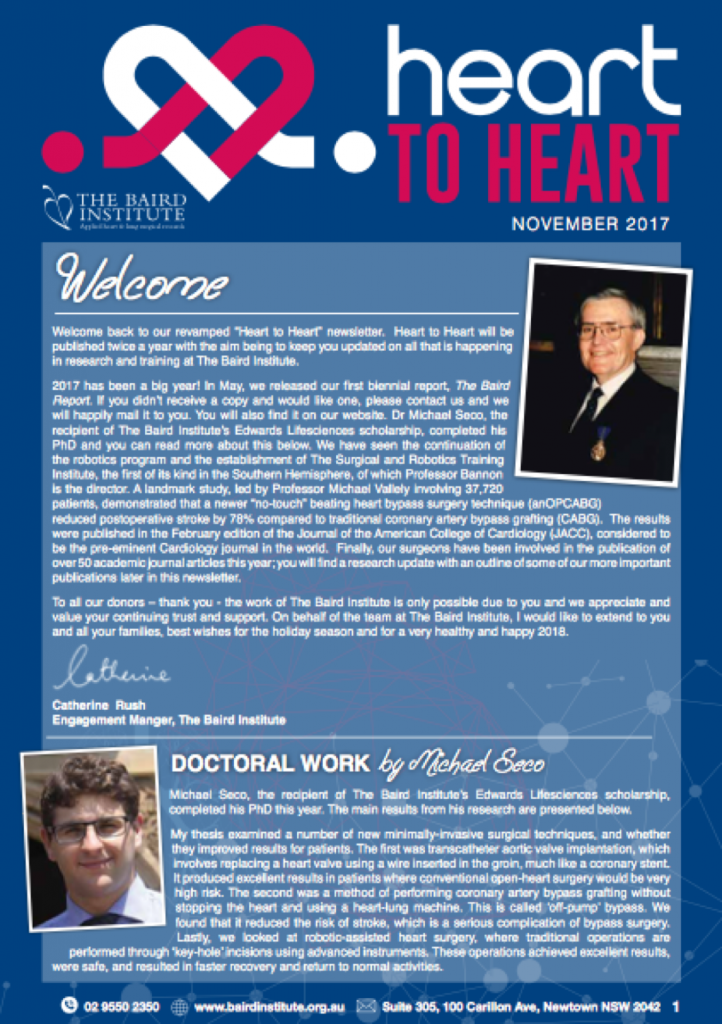
Click on the image to download a copy of the Heart to Heart Newsletter
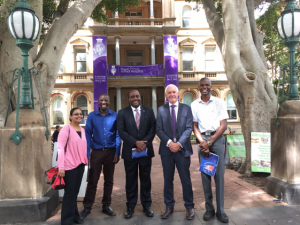
Future Participants of The Baird Institute’s Kenyan Fellowship Program

Two future participants of The Baird Institute’s Kenyan Fellowship program visit Australia

Pictured: (Left to right)  photographed in front of RPAH; Dr Nikita Mehta, Dr Fredrick Mitema, Ambassador Isaiya Kabiya, Prof Paul Bannon & Dr Victor Kwasi

In November we hosted two future participants of The Baird Institute’s Kenyan Fellowship Program in Australia; Dr Nikita Mehta and Dr Fredrick Mitema from Nairobi.  They came to Australia on a “travelling scholarship”.  While here they attended the annual conference of the Association of Thoracic and Cardiovascular Surgeons of Asia in Melbourne, then came to Sydney to visit Royal Prince Alfred Hospital (RPAH) and The Baird Institute’s research programs and research facilities. During the reception and tour, Dr Mehta and Dr Mitema were joined by the Kenyan High Commissioner from Canberra, Ambassador Isaiya Kabiya.

Nikita is the first locally trained female cardiothoracic surgeon in East and Central Africa and is a graduate of the program at The University of Nairobi that The Baird Institute helped establish around 5 years ago.  Dr Mehta completed her undergraduate and post-graduate training at the University of Nairobi last year, graduating with a Master’s degree in cardiothoracic and vascular surgery. She will return to Sydney in 2018/2019 to commence her 2 year surgical trainee fellowship at RPAH under the guidance of Professor Paul Bannon, the Chair of The Baird Institute. Nikita hopes this will give her the skills and knowledge to one day set up a self-sustained cardiothoracic centre of excellence in Kenya specialising in clinical care, training and research.

Please take a look at our interview with Nikita and Fred.

In Kenya, we are still in the infantile stage when it comes to cardiac surgery. This is partly because of the lack of skilled personnel, as well as the numerous challenges of providing super specialised care in a resource constrained environment. Working at RPA will give me exposure to cardiac surgeries which are not routinely performed back home.

“The best surgeon will eventually be a robot”

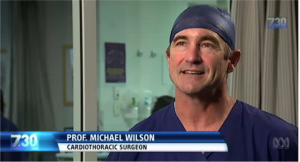
Professor Michael Wilson of The Baird Institute, recently spoke to Matt Peacock of the ABC’s 7.30 Report.

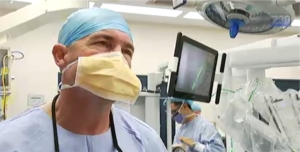
The revolution in robotics and artificial intelligence has made its way into surgery. Patients needing coronary artery bypasses would normally require open heart surgery but now, thanks to robots, they are facing far less traumatic surgery and a much faster recovery.

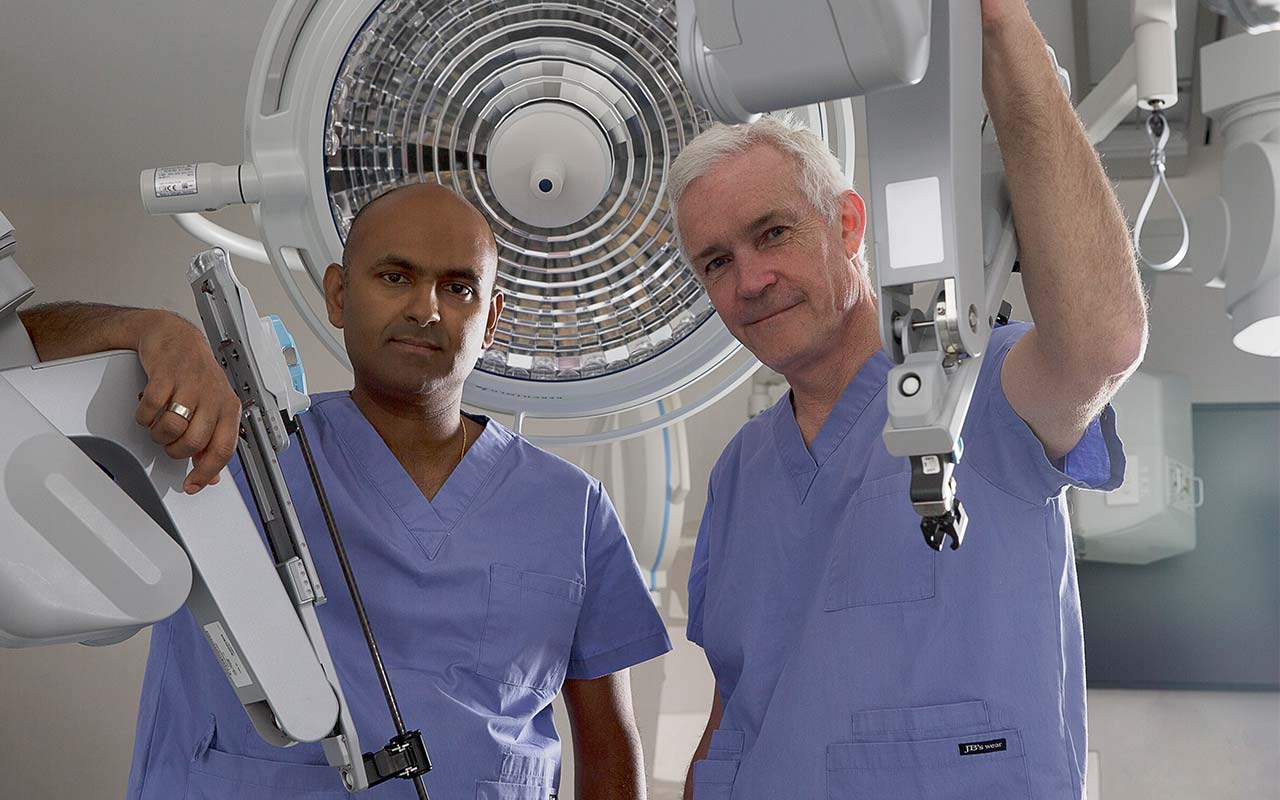
The “Da Vinci” robot is used by Professor Wilson to minimise the invasive chest surgery normally associated with a bypass operation.  Also talking to Matt Peacock on the 7.30 Report was Professor Vipul Patel from the “Global Robotics Institute” at Florida Hospital in the USA.  Professor Patel is world-renowned for his contribution to the field of robotic-assisted surgery and is one of the most experienced robotic surgeons in the world.  He has personally performed more than 10,000 robotic prostatectomies.

Professor Patel was the plenary speaker and guest of honour at the recent Sydney Robotic Summit on the future of Robotic Surgery.  The Summit hosted some of the world’s best Robotic Surgeons from across multiple surgical specialities. In his session, Professor Patel examined where we would be 10 years from now in the operating rooms of hospitals. Many of the surgeons associated with the Baird Institute also presented at the Robotics Summit; Professor Paul Bannon, Chair of The Baird Institute, spoke on adopting innovation ethically, while Professor Michael Wilson spoke on when to do open heart surgery, thoracoscopic surgery or surgery using the Da Vinci robot.  One of our past Research Fellows, Dr Michael Seco, presented on robotic cardiac surgery at the Summit.

‘When I first saw pictures of it, I couldn’t believe it. There was a surgeon to the side and the patient on the table. And the surgeon was controlling the whole thing through a robot at some remove from the operating table itself.”

ATACAS clinical trial named winner of the 2017 ACTA Trial of the Year

The people who make ground breaking clinical trials happen have been honoured. These are the people who save and improve lives across Australia and around the world by funding, designing, conducting or participating in clinical trials.

As a continuous and dedicated supporter of all cardiothoracic and vascular surgery clinical trials conducted with patients undergoing heart and lung surgery at RPAH, it is our great pleasure at The Baird Institute to report that the ATACAS trial is the winner of the 2017 ACTA Clinical Trial of the Year Award at the recent Clinical Trials 2017 National Tribute and Awards Ceremony.  The ceremony recognised the significant advancements and improvements made to the health of all Australians through clinical trials.

Costly robotic surgery “more acccesible” after opening of new Sydney training facility

Professor Paul Bannon, Chairman of The Baird Institute, talks to the ABC News about the opening of the country’s first robotic surgery training facility called the “RPA Surgical and Robotic Training Institute” at Royal Prince Alfred Hospital.

The facility will have the ability to train up to 400 surgeons each year in the use of the robot and as a result, more patients will have access to these less invasive procedures on the operating table.  The robot used to train the surgeons at the Institute cost around $4 million.

Robotic surgery allows us to perform complex procedures at a distance, with great precision and great control”, says Professor Bannon.  With this technology, surgeons make less invasive incisions which result in better outcomes and improved recovery times for the patient.  A quicker recovery means less time in hospital which in turn means a lower cost.

The robots have been used for several years in Australia, largely in private hospitals. However, Australian surgeons have had to travel overseas to develop their skills and this has been difficult due to the costs involved and a surgeon’s busy schedule.

Now, with the opening of the new training institute, the surgeons will be able to advance their knowledge in Australia, without the necessity to travel overseas.  This in turn will allow more public patients access to the less invasive procedures that robot allows.

Robotic surgery allows us to perform complex procedures at a distance, with great precision and great control.

We want to know how to teach robotic surgery and how to teach it better and we want to know exactly what the benefits to the patients are.

A robotics surgery symposium will be held in late June where doctors will discuss having a national register for surgeons who provide robotic treatment. The meeting will also address discretionary surgeon fees for such procedures.

View the original ABC News story here

KEY POINTS

  • For more than a decade, robotic machines have largely been used in private hospitals for procedures like robotic prostatectomy to treat prostate cancer and robotic mitral valve surgery for heart failure patients.
  • Nepean Hospital has been using robots for four years in the public system, however surgeons still had to travel to the United States for some of their training.
  • A 2016 Australian study published in prestigious journal The Lancet questioned the value of using expensive robotic technology to treat prostate cancer patients.
  • The Surgical and Robotics Training Institute will also collect patient outcome data and present its findings to state and federal governments.

Surgeons issue warning over government policy on the ABC’s 7.30 Report

Two of The Baird Institute’s Cardiac Surgeons, Prof Paul Bannon and Prof Michael Wilson, issue a warning over government policy on the ABC’s 7.30 Report.

The warning relates to government policy on a revolutionary keyhole heart surgery procedure called TAVI (Transcatheter Aortic Valve Implant) where the aortic valve is replaced without the need for open-heart surgery.  A surgeon inserts a new aortic valve into an artery with a very small wire, usually through the groin. The wire is then carefully manoeuvred up to the heart and inside the existing valve.

The government’s policy mandates that for this type of valve implant surgery, there is only the need for just one principal operator at the table, despite repeated warnings by both the Cardiology Society and the Surgical Society that this could result in dire consequences for the patients undergoing this procedure, even death!  The surgeons and cardiologists’ recommendation is for there be two operators – a cardiac surgeon and a cardiologist – working side by side and they would like the government to make this mandatory.

In the Unites States of America, the government has listened to the advice of the professional societies as well as the surgeons and cardiologists performing the procedure, that both a cardiologist and a surgeon – the “Heart Team” – be involved in operations involving the technique of Transcatheter Aortic Valve Implants.  In order to ensure that this happens, the government has made this a condition of payment.  Professor Michael Mack from the Bayler Heart Hospital in Texas who is a pioneer of the TAVI technique, said that he really believes that the government in the United States have got it right this time.

The surgeons explain that cost is not the issue as they are prepared to split the fee with the cardiologists so this will not cost the government any more than a single operator model.  Professor Bannon says that once the government rolls this out in November of 2017, they “would be morally and ethically bound not to allow the patients through to a single operator model”,

Experience has told us that we need to have cardiac surgeons and cardiologists at every step of the way;  at the decision making step, all the way through to the care of the patient and at the operating table.  You need both skill sets there from beginning to end.

If something goes bad with the heart and the heart stops beating, you’ve got about five minutes until you have irreparable brain damage … so you don’t have a lot of time to muck around and find a solution and get somebody into the room [to assist, therefore] we both need to be here and work collaboratively.

KEY POINTS

  • Government advisory committee recommends single principal operator for procedure
  • Surgeons say two principal operators are needed — a surgeon and a cardiologist
  • Surgeons warn they may boycott the procedure if two principal operators are not used

View the original story featured on the ABC here

A year of achievements celebrated at the Annual Baird Institute Christmas Party

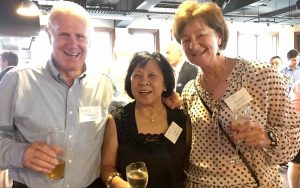
The Baird Institute’s Christmas “Cocktails and Conversation” was held on Wednesday 8 December, 2016 at the Woolloomooloo Bay Hotel.

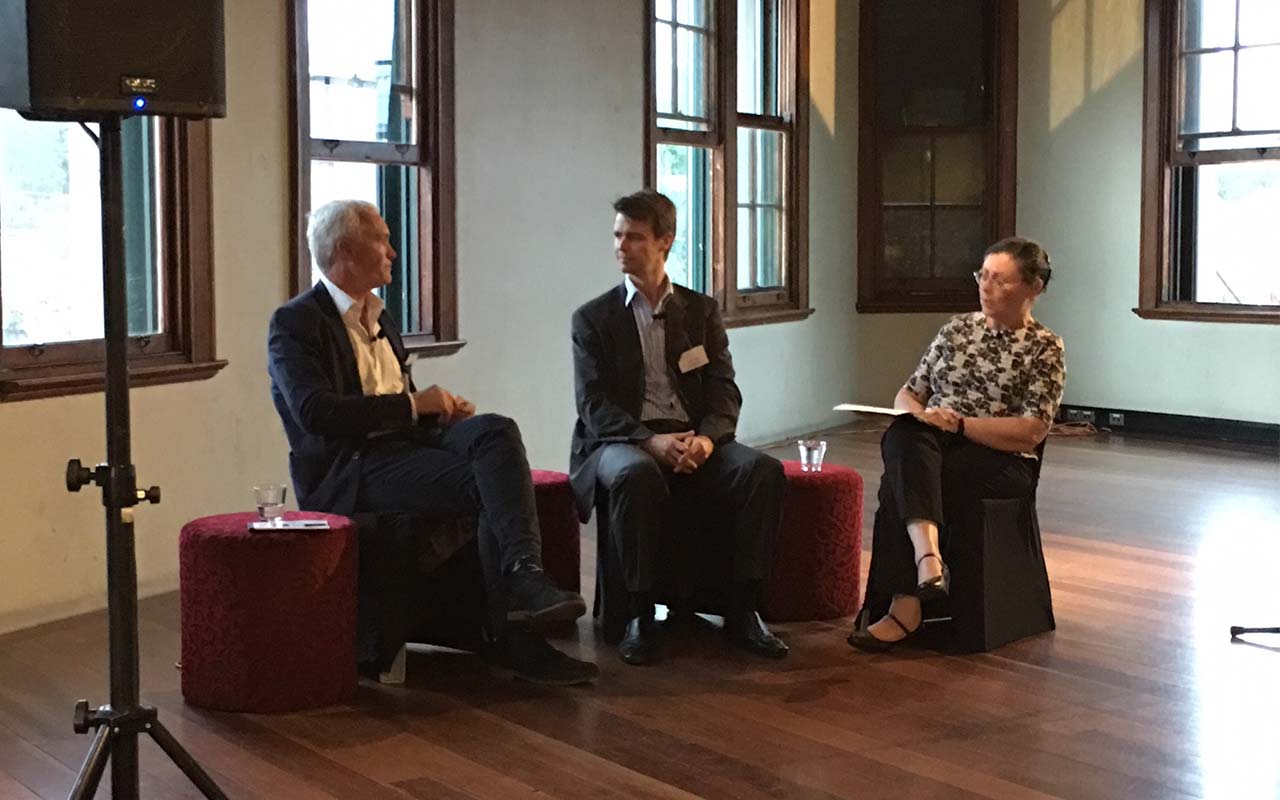
Our special guest for the night, award winning Australian Journalist and TV Broadcaster, Monica Attard, interviewed The Baird Institute’s chairman, Professor Paul Bannon and Dr James Edelman the recipient of the Baird Institute’s inaugural Medtronic Heart Fellowship.  They discussed the work they are currently involved in, their research achievements, the surgical and clinical challenges they face and the opportunities that lie ahead.

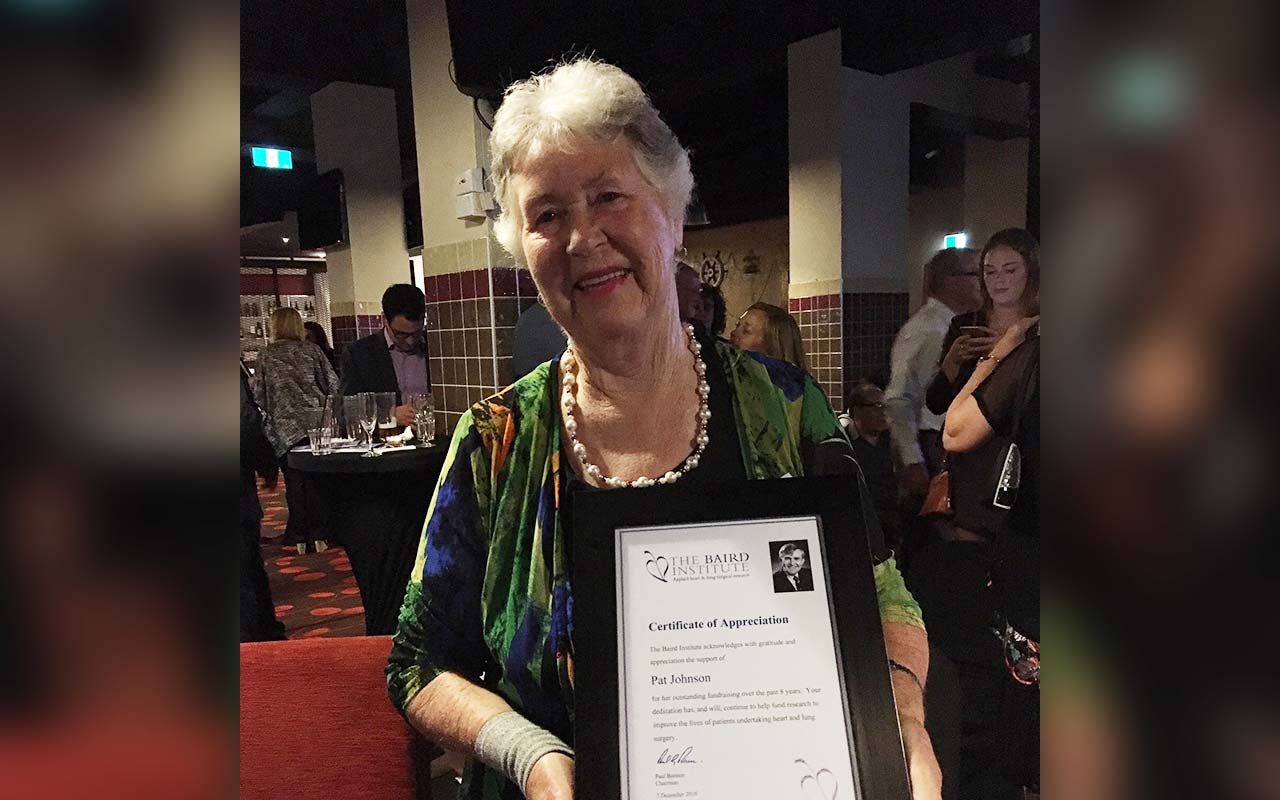
Our Executive Director, Michelle Sloane, celebrated the achievements of a number of our hardworking donors who have fundraised tirelessly for the Baird Institute over the years.  One of these fabulous donors is Pat Johnson who had a goal to fundraise $40,000.  With her most recent fundraising effort – a Christmas Ball in Gulgong, NSW – Pat fell just short of her goal. However an anonymous donor stepped in and gave Pat $500 which meant that the total of her fundraising efforts over the years had now arrived at $40,000!  This is an amazing milestone and as such, Pat was presented with  a certificate and a lovely big bunch of flowers of which she was so deserving.  We are ever so grateful to Pat for all that she has done for the Baird Institute!

The night ended with the drawing of the raffle tickets.  Philippa Baird, the wife of the Institute’s founder, Professor Douglas Baird, drew out the 5 winning tickets. There were many wonderful prizes to go around – a lovely food hamper, bottles of Piper Heidsieck champagne, a beautiful Singapore Orchid and High Tea for two in the Tea Room at the Queen Victoria Building.  A wonderful night was had by all as we focused on, and celebrated the Baird Institute’s mission, to foster research and apply science to improve the outcomes for patients facing heart or lung surgery.

THE FABULOUS VIEW  FROM THE WOOLLOOMOOLOO BAY HOTEL MADE THE EVENING EVEN MORE SPECIAL

Blackmore’s Sydney Running Festival 2016

Blackmore’s Bridge Run – Part of the Sydney Running Festival 2016

Our regular readers may remember when we wrote some years ago about Steve Suttor and his amazing determination to walk the Kokoda Track in PNG for The Baird Institute. Steve achieved his goal back in June 2011 – he walked the Track and raised almost $10,000 for the Baird Institute! Not only do we appreciate Steve’s generosity and willingness to do this for us but we were also very grateful to his wife Sam, who willingly let him go, despite the fact that their second child was due to be born only a few days after his scheduled return date home!

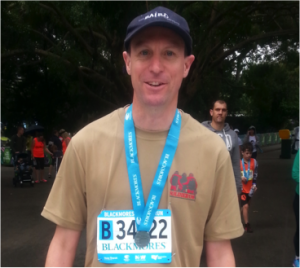
Recently, Steve achieved another inspiring personal goal – He competed in the 9 kilometre Blackmore’s Bridge Run, as part of the Sydney Running Festival 2016. He completed the run in just over 50 minutes (50.30) in the 40-49 age group! This is an amazing achievement considering that In 1989, when Steve was only 15, he was diagnosed with a spontaneous pneumothorax. The operation to deal with this condition – a pleurodesis – causes the membranes around the lung to stick together and prevents the build-up of fluid in the space between the membranes. The operation was conducted at St George Hospital. He had further surgery in 1991 at Strathfield Hospital where they inserted liquid into his lung cavity. This was intended to make the lung stick to the side, therefore preventing it from collapsing. So his lungs are now permanently stuck together at the top on both sides.   Many people have expressed their amazement at Steve’s willingness to take on such an enormous challenge as the Kokoda Trek. When we asked Steve about why he was prepared to do this, this is his response:

“I was only 15 when I got sick. I owe my life to the cardiothoracic doctors, surgeons and nurses who worked to save my life. For me, the choice to support The Baird Institute and to help them fundraise for their research work is obvious. I would never want others to experience what I experienced. I want to help others in the same situation – perhaps even through the money I raise to help save someone else’s life. I really want to give something back – to support those who helped to save my life.”

Our most sincere thanks go to Steve and to Sam for supporting us in this amazing way – for being prepared to disrupt their lives to help us raise money for our surgical research and training – you have both been amazing!

Stay in the loop

Subscribe to our Heart to Heart Newsletter to keep up with the latest developments in heart and lung research from The Baird Institute.
Honour a Loved One

  • Fundraise in memory of someone special to you.

Challenge Yourself

  • Run a marathon
  • Do a long bike ride
  • Walk 10km each day for a month
  • Do 50 sit ups every day for a week
  • Join an organised event such as the City to Surf

Organise a community event

  • Have a backyard sausage sizzle
  • Host a trivia night

Seek sponsorship to help you quit those bad habits

  • Give up smoking
  • Refrain from alcohol for a month or more

Celebrate Through Giving

  • Choose to give on your birthday: Instead of giving you gifts, ask your friends and family to donate to The Baird Institute.
  • Say “I do” to improving the lives of heart and lung patients: Invite guests to donate to The Baird Institute on your wedding day
  • Turn anniversaries or personal milestones into fundraising events.

Create a CrowdRaiser on GiveNow

  1. Go to CrowdRaiser for The Baird Institute.
  2. Scroll down towards the end of the page to the MY CROWDRAISER box.  Click on the button “CrowdRaise Now”.
  3. Create your CrowdRaiser. Fill in the requested details.
  4. Customise your campaign. Add images and messages to make your CrowdRaiser unique.
  5. Share the link to your fundraising page via email, social media, or any way you like.
  6. Let us know via [email protected] that you have created a fundraiser so we can say thank you.

Join a community passionate about making a difference. GiveNow provides a dedicated platform for Australian charities, ensuring your efforts directly support our mission.

Start a Facebook Fundraiser

  1. Go to Facebook fundraisers.
  2. Click on the blue button – “Select nonprofit”
  3. Search for and select The Baird Institute
  4. Set your fundraising target
  5. Choose your campaign end date & a title for your Fundraiser
  6. Personalise your fundraiser: Use the existing wording and photos or choose your own.
  7. Click on ‘Create’.
  8. Invite friends and family. Share the link for your fundraiser and encourage others to contribute.
  9. Let us know via [email protected] that you have created a fundraiser so we can say thank you.

Celebrate where your friends and family connect. Leverage your social network to make a real impact.