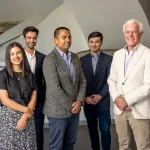
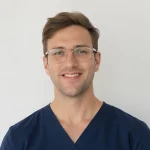
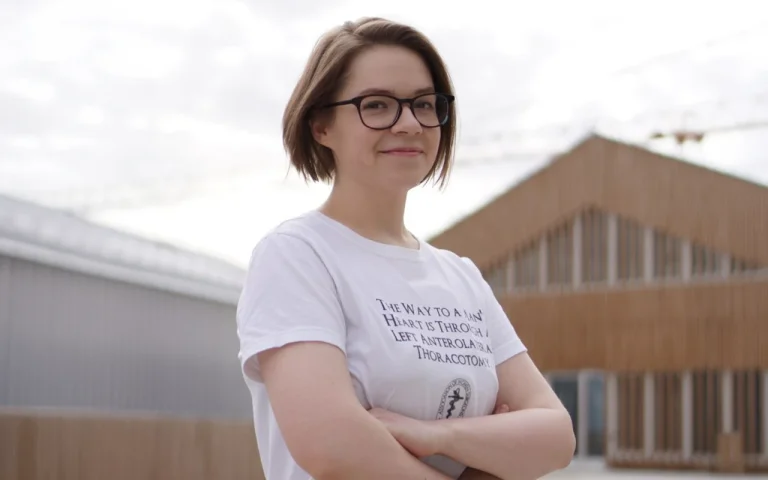
My name is Yulia Mitina, and in 2026 I was privileged to join The Baird Institute, as a Post-Doctoral Research Associate, within the Centre for Heart Failure and Diseases of the Aorta, led by Professor Paul Bannon (Chair of the Baird Institute), Professor Sean Lal, Professor John O’Sullivan and Dr Robert Hume. I trained as a cardiologist in Russia, and it was caring for patients with heart disease that drew me into research. I always wanted to understand these conditions at the level where they begin, so that we might treat them better. I now work with human stem cells, that are made from adult cells ‘reprogrammed’ back into their original state. Using these cells, I am building models that allow me to grow miniature heart tissue in the laboratory and study how heart disease develops at the cellular level.
When heart muscle is damaged, for example during a heart attack, the body forms scar tissue rather than new muscle, and this steady loss of working muscle is a leading cause of heart failure. During my PhD I identified a drug compound that can prompt human heart muscle cells to divide again, to make more muscle, and mapped the signalling pathways that control this process. I now use human stem cell-derived heart muscle cells and three-dimensional miniature heart models, which reproduce features of real heart tissue in the dish, to search for new compounds and pathways that drive regeneration, particularly under the ischaemic conditions of a heart attack.
Alongside this, I study diseases of the aorta, the largest artery in the body. Through the Sydney Heart Bank and working closely with the colleagues who maintain this remarkable tissue collection, I examine human aorta samples to understand what distinguishes the most dangerous forms of disease. Aortic aneurysms, a condition where the artery wall weakens and ‘balloons out’, often progress silently, giving no warning until the life-threatening event of an aortic dissection, whereby the wall ruptures. By measuring thousands of proteins and genes across healthy aortas and several different aortic conditions, I am working to identify the molecular changes that mark severe disease, which may support earlier diagnosis and better-timed surgery. I am also developing miniature aortic tissue from stem cells, much as I do for the heart, to create a living laboratory model in which these diseases can be studied directly.
I use large-scale techniques such as proteomics and RNA sequencing to measure thousands of proteins and genes at once, and I build the computational tools that turn these datasets into clear biological findings. My broader aim is to develop laboratory models faithful enough to guide future treatments, including personalised therapies tailored to a patient’s own cells and disease. As a clinician, I am especially committed to making sure our discoveries reach the people they are meant to help.
None of this research would be possible without the generosity of our tissue and philanthropic donors, as well as their kind families. It is a privilege to be trusted with such precious samples, and I am committed to using them with great care to advance our understanding of heart and aortic disease.